
Generative AI in Game Development: A Practical Guide for Devs
Disclosure: This article contains referral links for certain page links provided. I may be compensated for successful referrals. These referral links may contain additional rewards for you.
Generative AI has quietly become one of the biggest time-savers available to game developers right now. But most guides either oversell it as a magic fix or dismiss it as artistic cheating. The reality is messier and more interesting than either takes.
Here's an honest breakdown of when to use it, how to use it responsibly, and which approach actually fits your project.
- Why Game Devs Are Turning to Generative AI
- Who's Affected When You Use AI in Game Development
- The Golden Rule: Always Keep a Human in the Loop
- Best GenAI Tools for Game Development
- Approach 1: Skip AI Entirely
- Approach 2: AI as a Placeholder
- Approach 3: AI for Non-Primary Assets
- Approach 4: AI for All Assets
- Final Verdict: Which Approach Is Right for You?
Why Game Devs Are Turning to Generative AI
If you're an indie dev or part of a small studio, your two scarcest resources are time and money. Gen-AI directly attacks both problems.
Need a tile set for a forest biome you didn't plan for?
Generate a batch, pick the best, and clean it up.
Need your UI text translated into six languages without blowing your localization budget?
A combination of AI translation and human verification gets you there in a fraction of the time and cost of a full agency engagement.
The use cases are broader than most people realize. concept art, texture generation, sprite creation, music, dialogue, UI elements, NPC names, and even procedural narrative branches.
For solo devs especially, the productivity ceiling has shifted dramatically. What once required hiring specialists can now at least be started with a few well-crafted prompts.
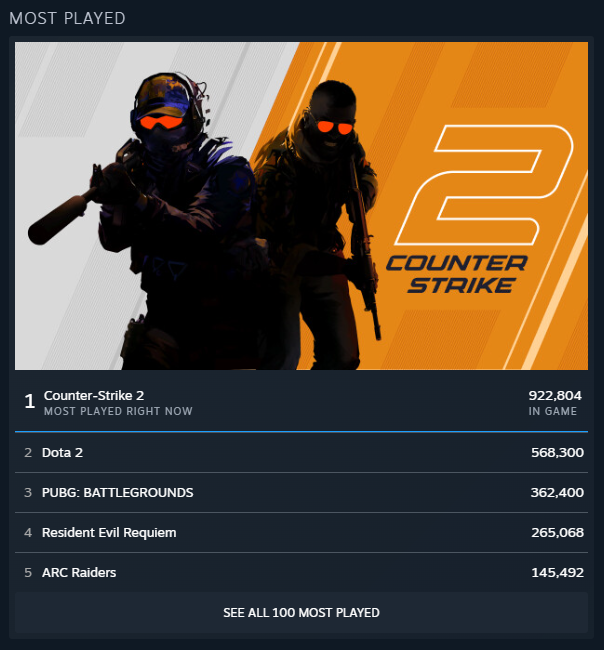
And for AAA games, it's even more compelling. Arc Raiders has used AI-generated content and is currently sitting at the top 5 Most Played Games on Steam.
Who's Affected When You Use AI in Game Development
Before you fire up any AI tool, it's worth being clear-eyed about who is actually affected by your decision. The blowback is real, and it comes from multiple directions.
Companies as IP holders
They are the legal minefield. AI models are trained on existing work, and some outputs can look uncomfortably close to protected material. If your AI-generated character art resembles a major franchise a little too closely, that's a big legal problem waiting to happen. You need eyes on this before anything ships.
Artists as competitors and collaborators
They are the cultural tension. Artists have strong feelings about AI art replacing human artists. Whether you agree with their position or not, it's a factor that will affect how your game is received, reviewed, and talked about online.
Gamers as buyers
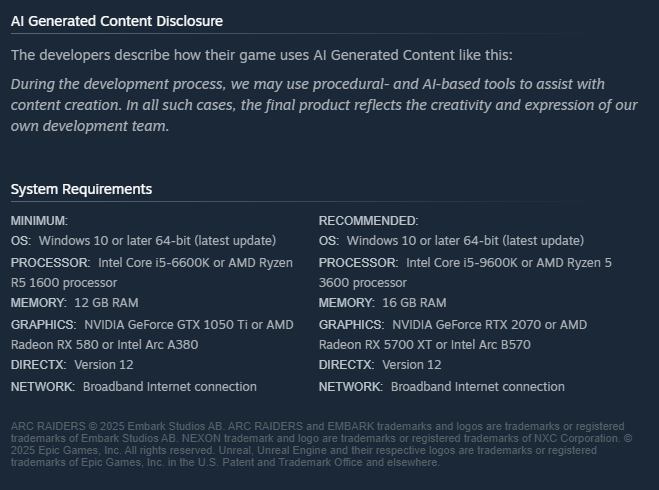
They are the market reality. Some players actively avoid AI-generated games. Others genuinely don't care. Knowing your target audience's sentiment before launch gives you options, including how transparent to be about your workflow. For a game marketplace like Steam, there's already a specific disclosure section to explain how you use AI-generated content in your game
The Golden Rule: Always Keep a Human in the Loop
This is the one thing I'd put on a poster above every indie dev's desk: AI is a tool, not a replacement for expertise or judgment.
Generated art needs a human check for IP similarity.
Translated text needs a fluent speaker to verify it's not accidentally offensive or nonsensical.
It's now basic quality control to have someone review what it produces
Think of it this way: if you hired an expert translator and published their work without reading it, you'd be the one responsible when it goes wrong. AI output is the same situation. You're accountable for everything you ship, regardless of what generated it.
The loop doesn't have to be slow. It can be a quick sanity check. But skipping it entirely is how you end up with a mistranslated Japanese game title that goes viral for all the wrong reasons, or an enemy sprite that looks suspiciously like it belongs in a Nintendo game.
Best GenAI Tools for Game Development
The landscape is moving fast, but here's where I'd point developers looking to actually integrate this into a pipeline:
General image generation
Tools like these are your starting points for concept art, environment sketches, and character exploration.
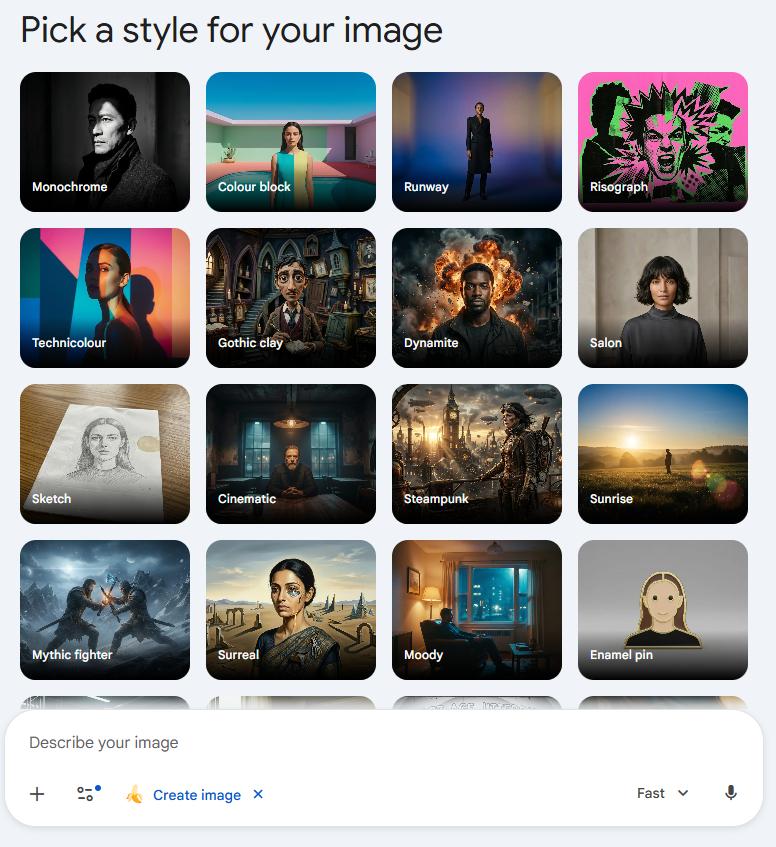
- Nano Banana 2 is considered the best in the current market for GenAI art. Expect to use this tool with a mixture of others
- Grok Imagine is typically used by X (formerly Twitter) users.
- Midjourney has its art style consistency has improved significantly, and it's genuinely useful for getting a visual language established before you commit to anything.
Game-specific SaaS tools
These are where things get more interesting. The game-specific tools generally understand the technical requirements better than general image generators, so if your pipeline has specific format or style constraints, they're worth the subscription.
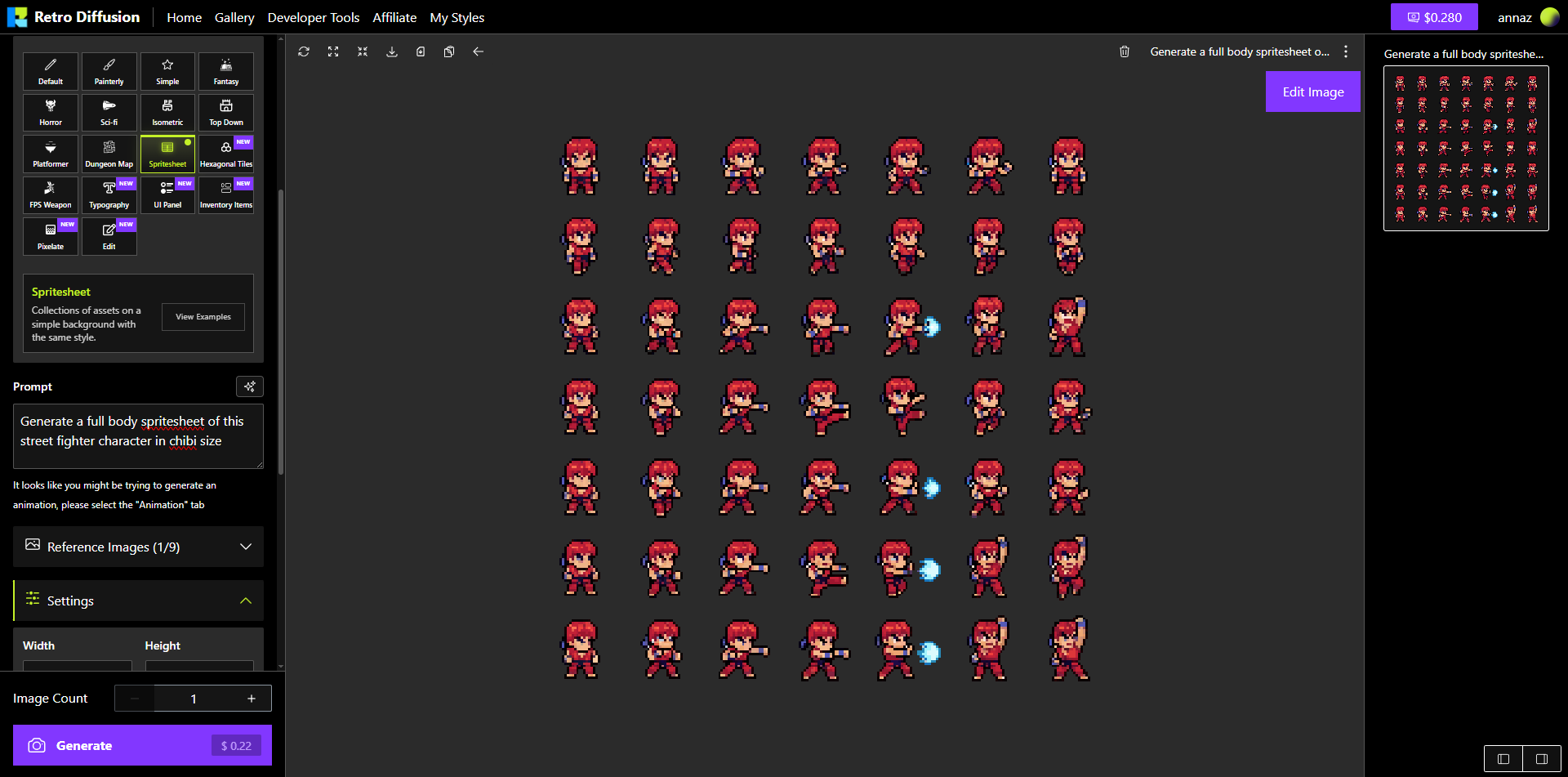
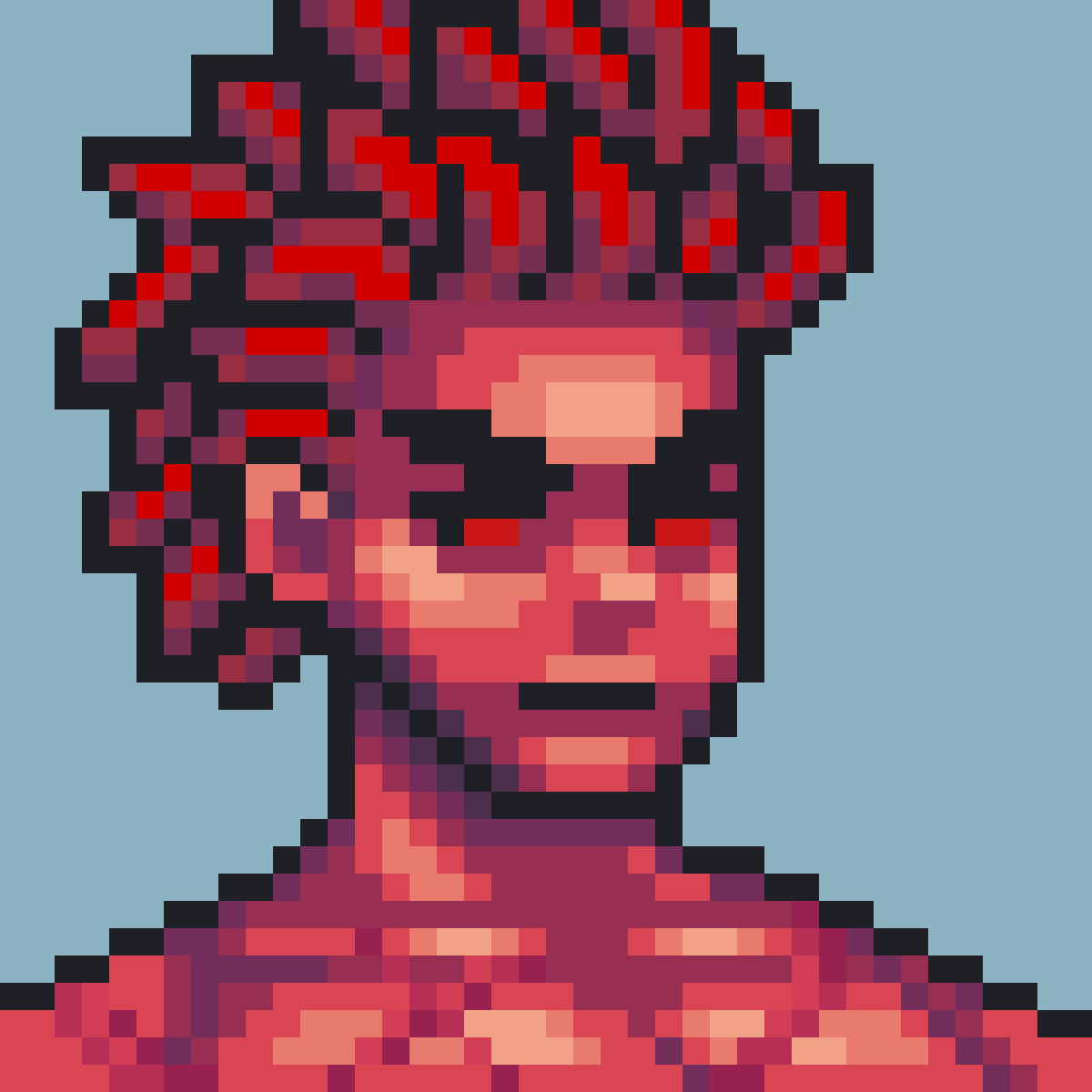
- Retro Diffusion is purpose-built for pixel art. It respects the constraints of the format rather than just generating vague "pixel-style" output.
- MeshyAI handles 3D model generation, which is still a rougher process but usable for low-poly work or rapid prototyping.
- ElevenLabs helps create captivating audio experiences. It can convert text to audio quickly.
Approach 1: Skip AI Entirely
This is the traditional route.
Everything is made by hand, either by you or by commissioned artists. Before you dismiss it as the "just too slow" option, it's worth being honest about what it offers: complete creative control, zero IP concerns, no community backlash, and unambiguously original work.
The cost is real, though. It's slower, and learning art well enough to do your own is a significant investment of time. Commissioning artists adds budget pressure. For games where the visual craft is central to the experience, i.e., hand-drawn narrative games, this still might be the right call. But for most small studios managing limited resources, it's the most expensive approach in either time or money.
Approach 2: AI as a Placeholder
This is actually a clever use of AI that sidesteps a lot of the ethical complexity: generate assets purely to prove out your game concept and build early interest, with a full intention of replacing them before launch. You get something visually coherent to show playtesters, potential investors, or early Kickstarter backers, none of which requires you to ship the AI art.
The trade-off is that anti-AI playtesters can still react negatively even to placeholder content if they know it's AI. The other practical issue is that "we'll replace it later" has a way of becoming "we shipped it." If you go this route, be disciplined about the replacement schedule. Having placeholder art linger in a launch build is more common than most devs want to admit.
Pros
- Fast concept validation
- Attractive to investors with something visual to show
- Avoids permanent AI art criticism if replaced
Cons
- Anti-AI playtesters may still push back
- Replacement schedule requires real discipline
- Placeholder quality can set expectations that hurt later
Approach 3: AI for Non-Primary Assets
This is the middle-ground approach.
- human-made art for your hero assets: main characters, key environments, anything players will stare at for hours
- AI for the supporting cast: background enemies, environmental clutter, menu decorations, filler textures.
The logic is sound. Players don't scrutinise mob #47 the same way they scrutinise your main character's idle animation.
I think this is genuinely the most pragmatic approach for resource-constrained teams right now. You get meaningful time savings on assets that functionally need to exist without being remarkable, while protecting the visual identity that actually defines your game.
Expect some criticism from the anti-AI community regardless. There's no clean middle ground publicly. But within your own pipeline, this is defensible and often the most efficient route.
Arc Raiders is a live example of Approach 3 at scale. AI asset integration to non-primary assets on a commercial title.
Approach 4: AI for All Assets
Full AI pipeline, every asset generated, refined, and shipped as AI art. This maximizes speed and minimizes art production cost, which for some projects (rapid game jam entries, experimental prototypes, games where the visual style is intentionally lo-fi) makes complete sense.
The real technical problem here isn't public perception. The biggest problem is style drift. AI generation is not inherently consistent across prompts, sessions, or tools. Your forest enemies might look subtly different from your dungeon enemies, which look different from your boss sprite.
Maintaining coherent visual identity across hundreds of assets is a genuine, underestimated challenge. You'll spend real time curating and re-generating to keep things aligned. You have to honestly weigh whether that time cost beats just commissioning an artist to establish and maintain a style guide from the start.
Pros
- Fastest art production pipeline available
- Lowest upfront cost for solo devs
- Good for rapid prototyping and game jams
Cons
- Style drift across assets is a real, time-consuming problem
- Strongest negative reaction from anti-AI players
- IP review burden is highest with the most output
Final Verdict: Which Approach Is Right for You?
There's no universal right answer here, and anyone telling you otherwise is selling something.
The honest framework:
- if your game's identity lives in its visual craft and your audience cares deeply about art authenticity, avoid full AI or at minimum be transparent about your pipeline.
- If you're a solo dev racing to ship a proof of concept, Approach 2 or 3 is a legitimate strategic choice. Just be rigorous about the human review step.
The approach I'd push most developers toward, if they're going to use AI at all, is Approach 3 (AI for non-primary assets). It gives you real-time savings without compromising the visual signature of your game. Use Retro Diffusion or MeshyAi for the assets that need to exist but don't need to shine, and spend your energy and your commissioned budget on the stuff players will actually remember.
Whatever you pick: keep a human in the loop, have a clear IP review process, and be honest with yourself about what "I'll replace it later" actually means in your project timeline.
Got a take on AI in game dev? Drop it in the comments. I'm genuinely curious how other devs are navigating this. And if you found this useful, share it with someone who's about to start their first indie project.
Comments ()