
Goblins of Elderstone: The Story of How I Lost My King and Won the Winter
Disclosure: This article contains referral links for certain page links provided. I may be compensated for successful referrals. These referral links may contain additional rewards for you.
A goblin tribe-builder where your King can literally die in battle mid-winter, and you have to appoint a new one while the undead are still at the gates. I didn't expect to care this much about a bunch of green guys I can't even tell apart by gender.
Every Goblin Tribe Starts With One Decision
It starts with a Grand Hall and a choice.
Your goblin settlement spawns with a King who needs protecting and a vacant Tribe Chief position that's yours to fill. I did what anyone would do; I picked the most serious-looking goblin in the lineup and handed him the job. He didn't have the experience for it. He had the face of someone who'd seen things.
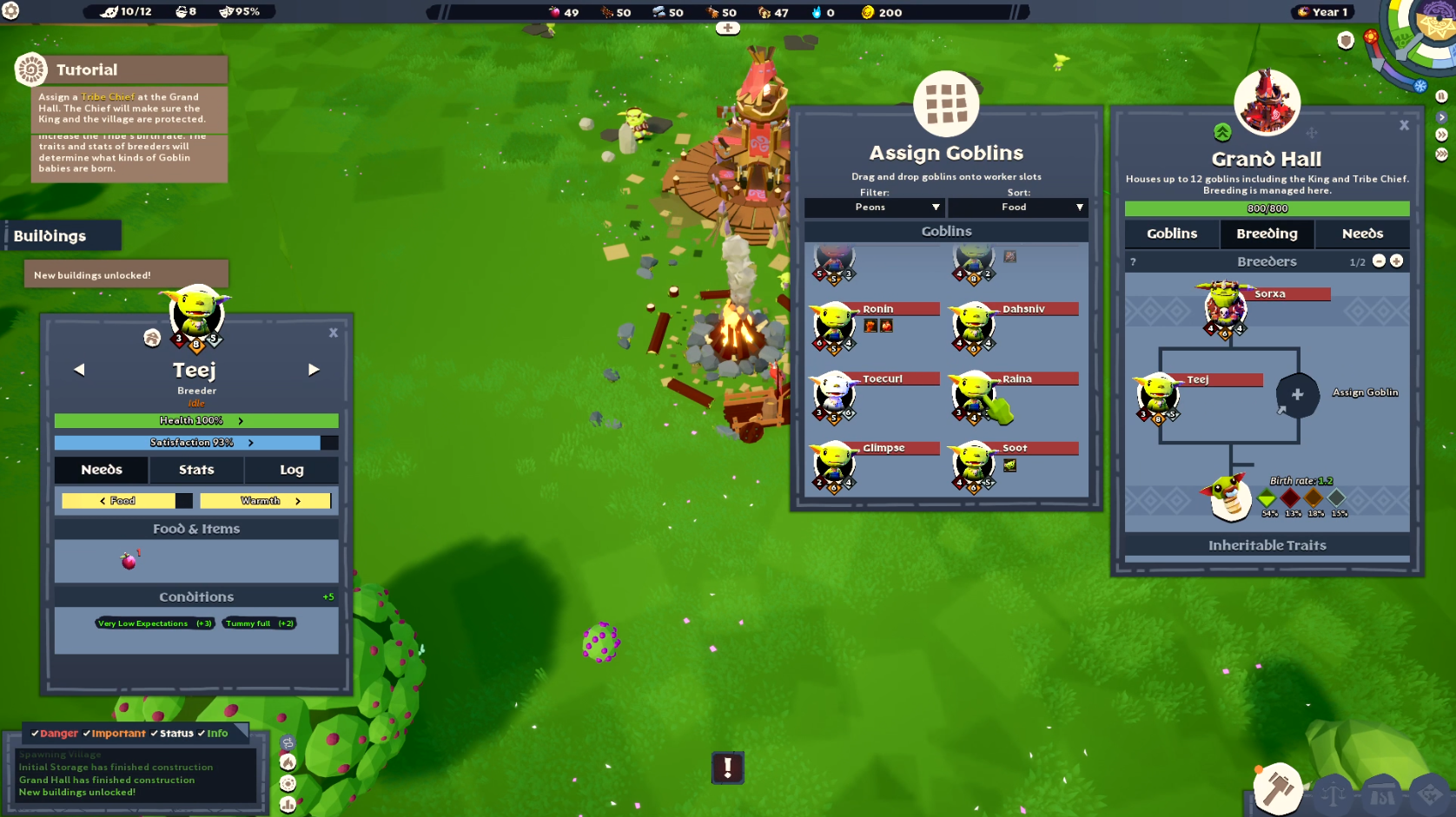
Then came the part that the game glosses over but somehow feels the most important: pairing the Chief with breeding partners. You can't grow a goblin clan without growing the population, and the game doesn't explain the logistics here. I still don't know which goblins are male or female. I don't think the game knows either. What I do know is that you can pair anyone with the Chief, and apparently, that's enough. Don't overthink it. I didn't.
This early moment, picking a chief, establishing a lineage, and making a decision with almost zero information, sets the tone for everything Goblins of Elderstone is about. You're always making consequential calls with incomplete data.
Building the Basics
The first real task is survival infrastructure, and the game walks you through it cleanly.
I built a Storage hut near the berry clusters, food access before anything else.
Then came the Toolmakers' Hut (goblins need equipment to work).
Then Woodcutter Hut to collect logs.
Then Kindler to convert logs into usable firewood.
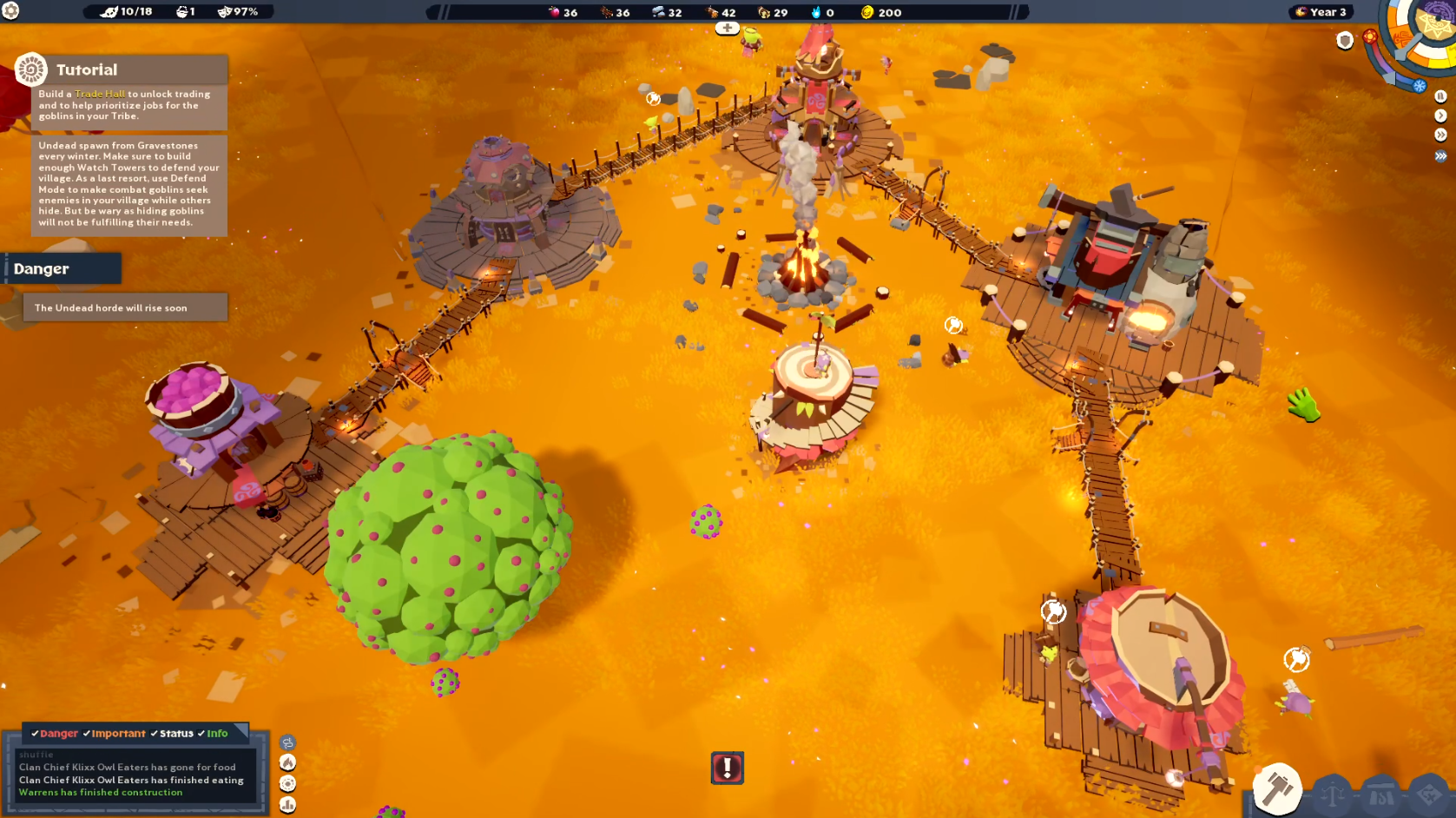
Then Warren's to house the growing population.
Then a Watchtower went up to cover the perimeter.
And finally Trade Hall to open routes to travelling merchants.
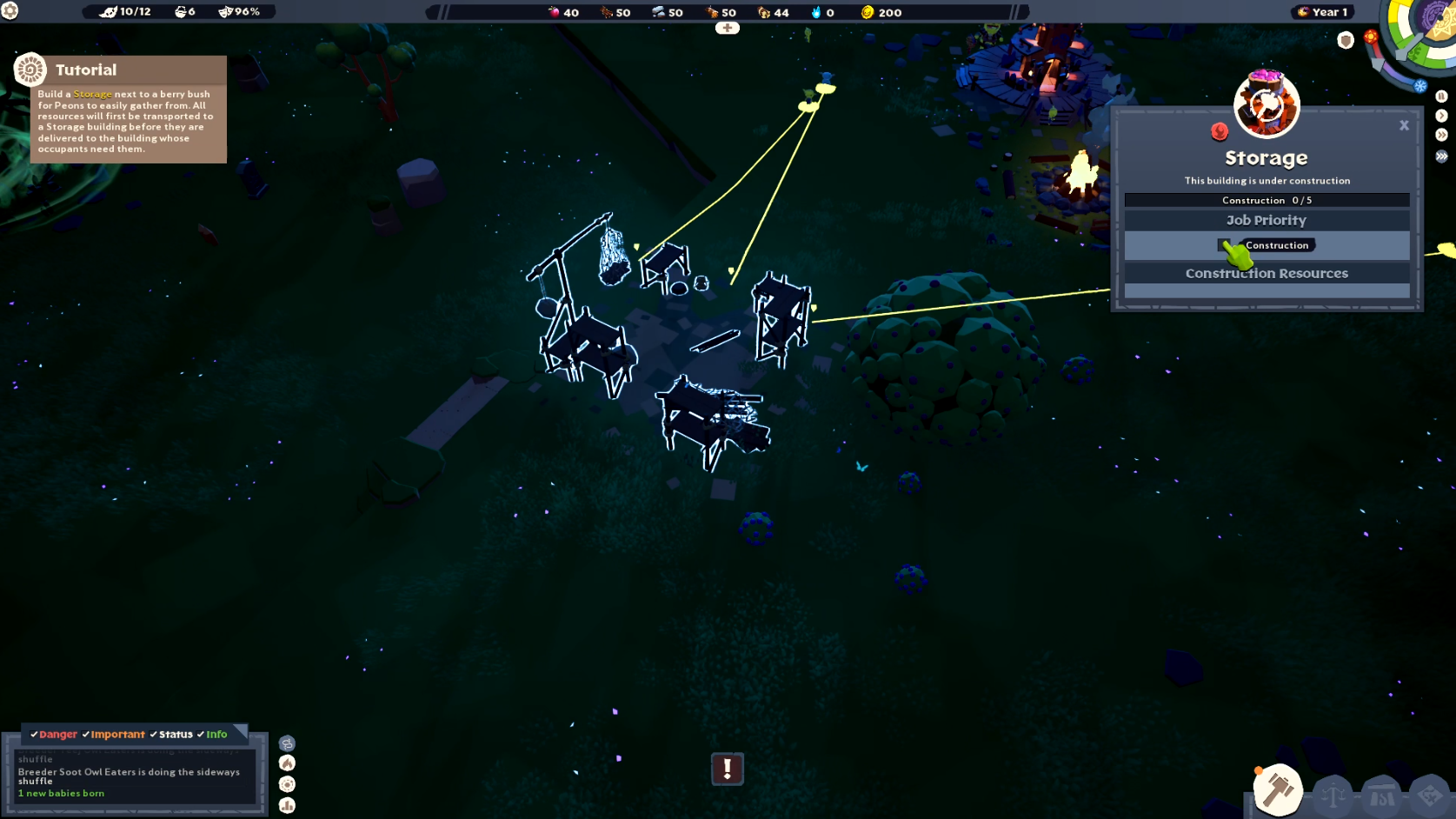
Here's the mechanic that makes all of this interesting:
Each building accepts up to 2 assigned goblins, and those goblins gain role-specific stat bonuses.
Assign a goblin to Storage, and they become a Hauler. They're better at collecting and moving resources. It's a simple system, but it means every building decision is also a roster decision. You're not only placing structures but developing a workforce.
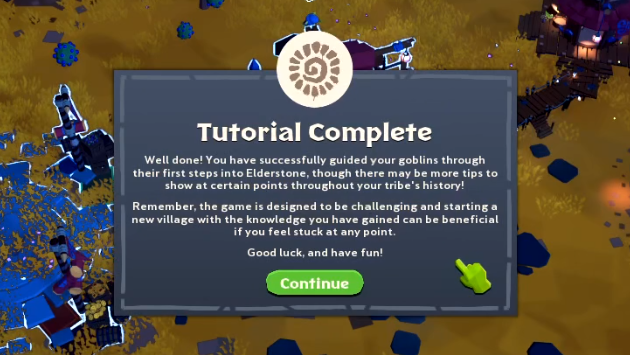
By the time the tutorial wrapped up, I had a functioning small tribe. Six or seven buildings, a handful of goblins with actual roles, and the first hint of genuine attachment to this ridiculous little settlement I'd built.
The Moment Goblins of Elderstone Started to Feel Real
The tutorial ends. Then the game tells you something it's been holding back.
Undead spawn from Gravestones every winter. Use watchtowers to defend against them. As a last resort, activate Defend Mode, and your goblins will fight in ground combat.
That last line carries weight you don't fully appreciate until you need to use it.
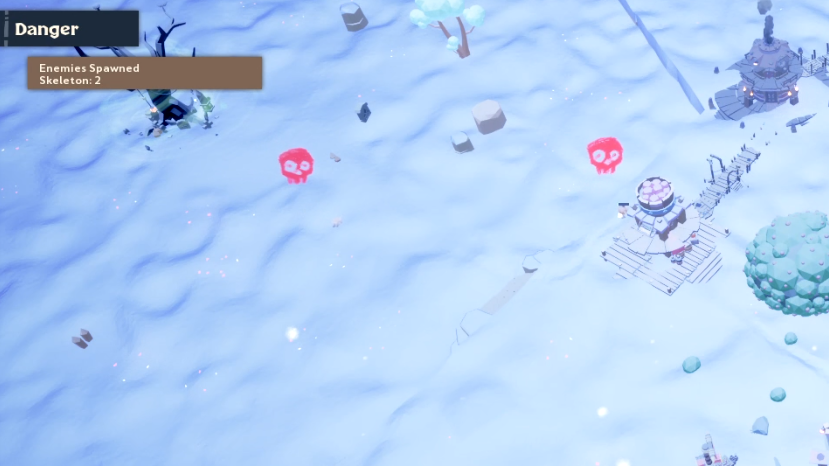
The first winter arrived. Five undead at most. My watchtower guards handled them without breaking a sweat. It was a clean, almost anticlimactic defense. My tribe was safe. Everyone lived. The season changed, and we went back to building.
But here's the trap the game sets with that easy first winter:
It lets you believe you're in control.
Expansion felt natural. More goblins bred, more buildings went up, and the perimeter pushed outward. Frog farms are built for additional food. Weapons started being manufactured.
The tribe was growing. But growth is simultaneously your goal and your biggest vulnerability.
I Got Greedy, And Winter Made Me Pay for It
The second winter is where the game shows its teeth.
I'd expanded beyond my watchtower's coverage zone. Buildings sat outside the protected perimeter because the goblins needed more resources, and there was no clean alternative. I didn't have enough materials to extend the watch coverage, and I didn't have enough goblins to spare as additional guards. I knew it was a problem.
I told myself I'd fix it before winter.
Winter came before I fixed it.
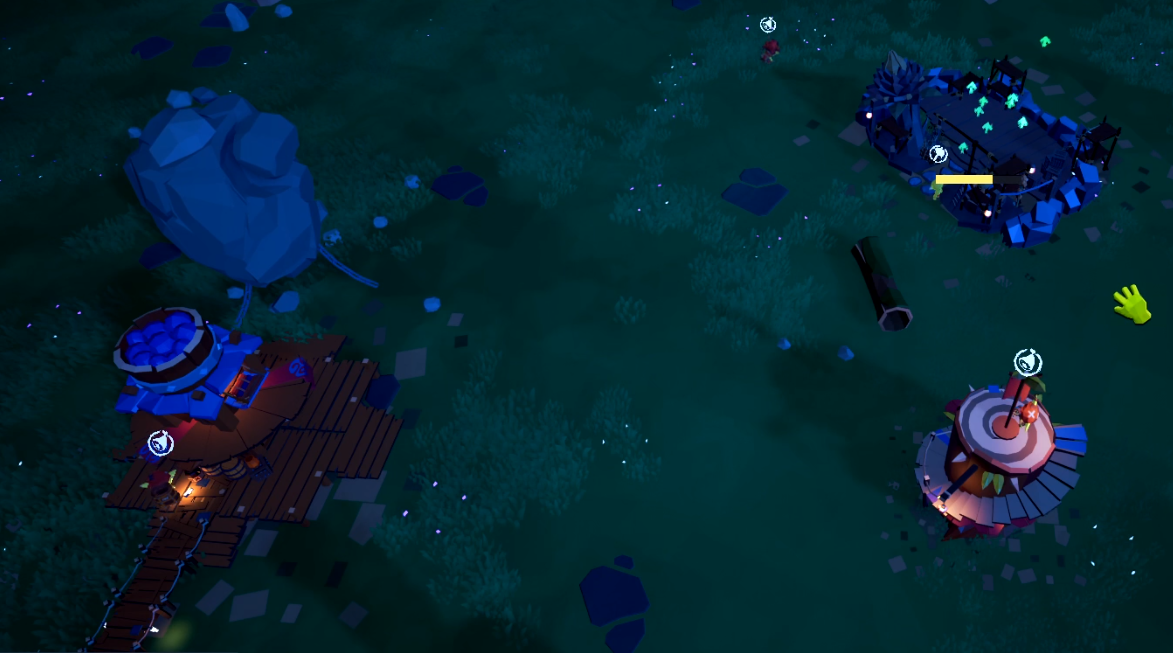
The undead hit the outlying buildings first. The ones I'd built outside the perimeter was completely undefended. I had no way to protect them. The goblins retreated, pulling back toward the core of the settlement while the outer structures took the brunt of it. Then the undead followed.
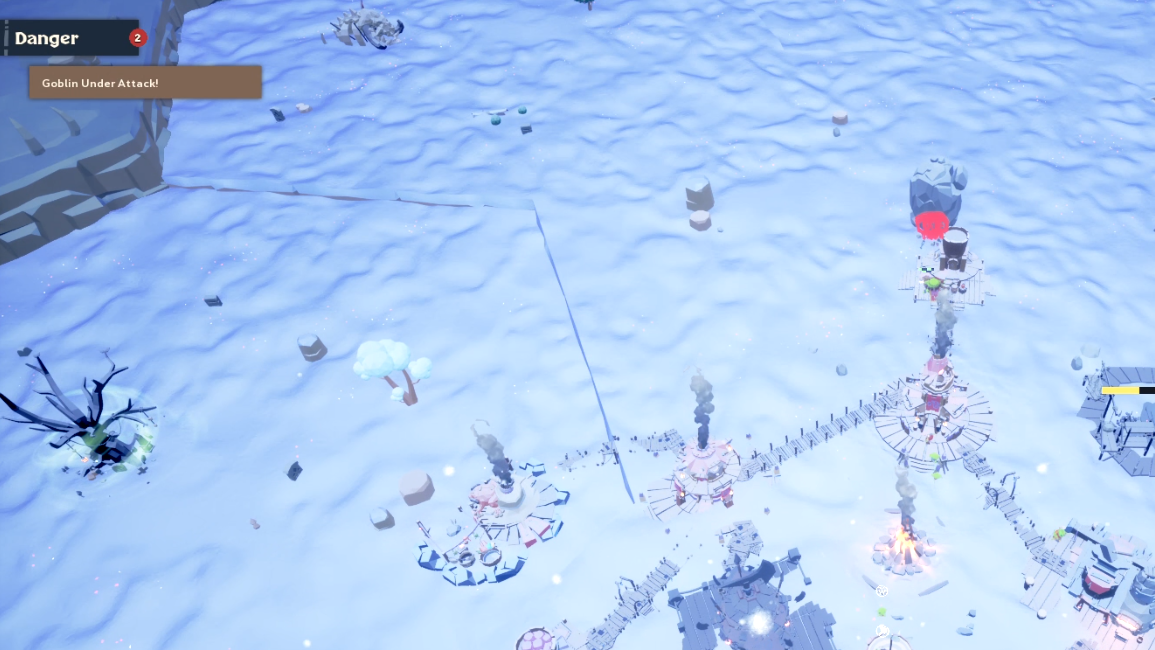
The watchtower guards weren't enough this time. Too many, coming too fast. I activated Defend Mode.
My goblins poured into ground combat with the weapons I'd had time to make, which wasn't many. I hadn't prioritized the weapons stockpile. Another decision I'd told myself I'd fix before winter. I hadn't.
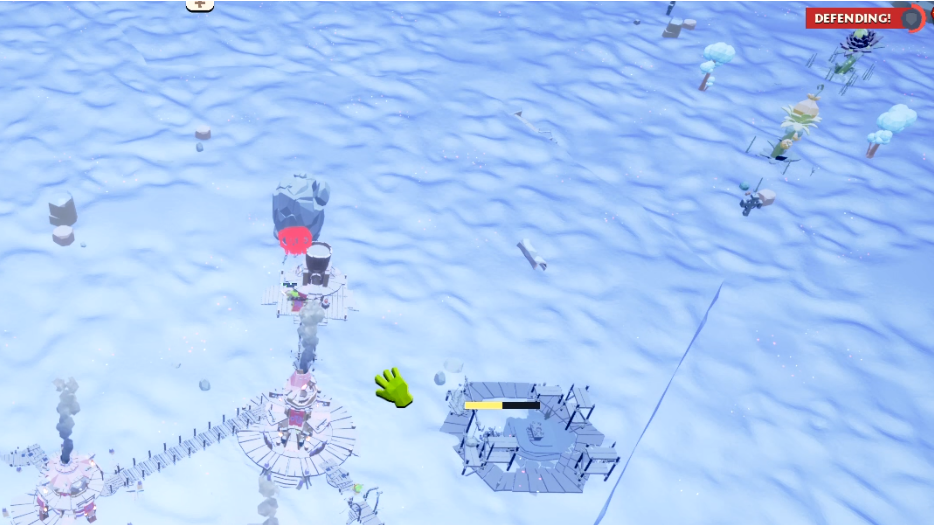
The King Fell. The Tribe Survived.
One by one, my goblins fell in the melee. The tribe was shrinking in real time. And then the King, the protected figurehead I'd spent the whole game keeping safe, made a decision. He walked into the fight himself.
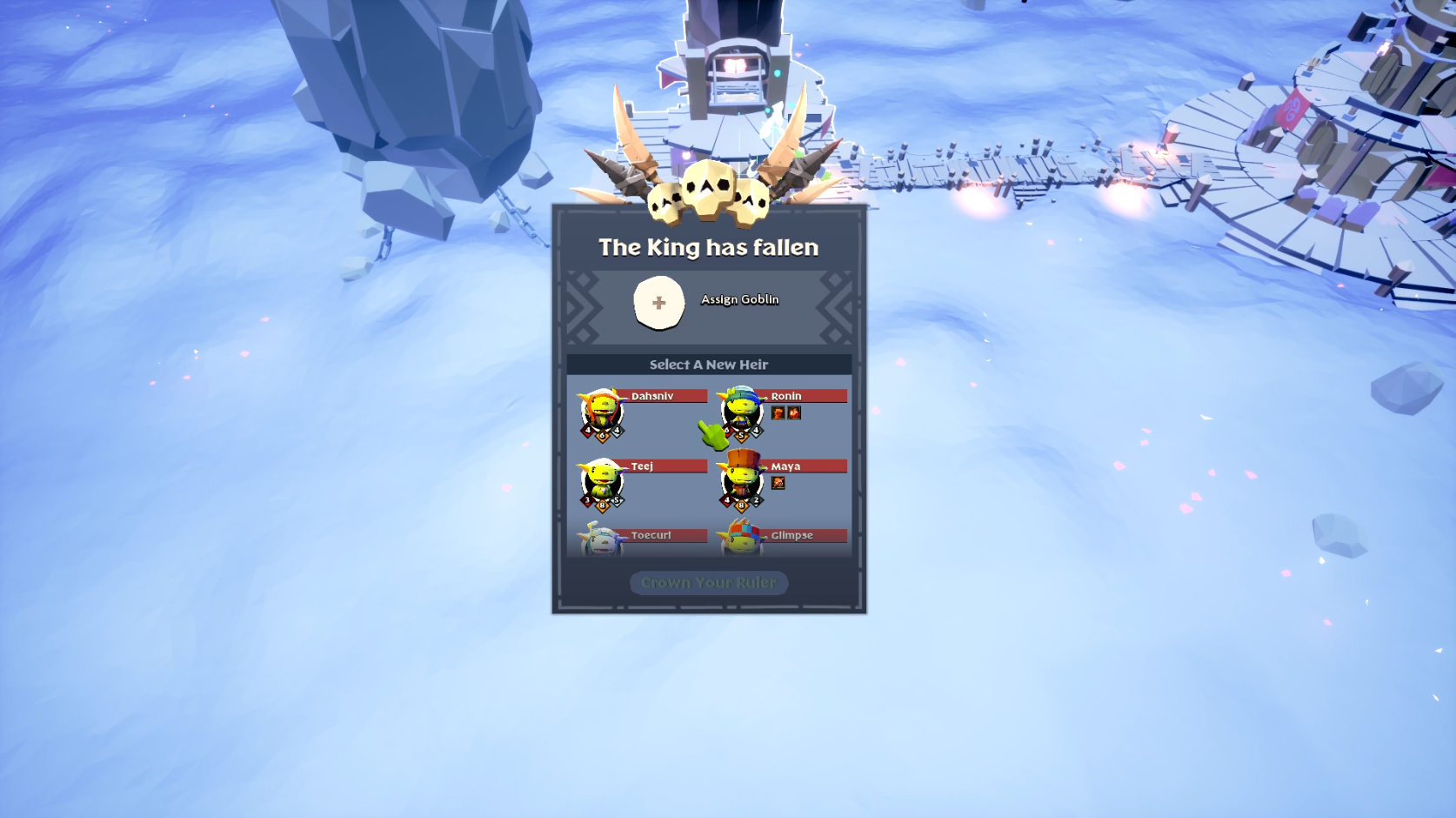
I don't know if that's scripted or emergent. It doesn't matter. Watching the King charge into a losing battle with a handful of undead still standing felt genuinely dramatic in a way that city builders rarely manage.
He died. Mid-battle. While the fight was still happening.
The game didn't pause. A new King had to be appointed immediately during the battle. The moment he was named, the remaining goblins fought on.
The king is dead, Long live the king!
The previous King's sacrifice had bought enough time. The wave broke. The tribe survived.
I sat there for a moment after the last undead went down, looking at a smaller, battered settlement than the one I'd started winter with. And I felt it, that specific feeling you only get from games that let consequences land without softening them.
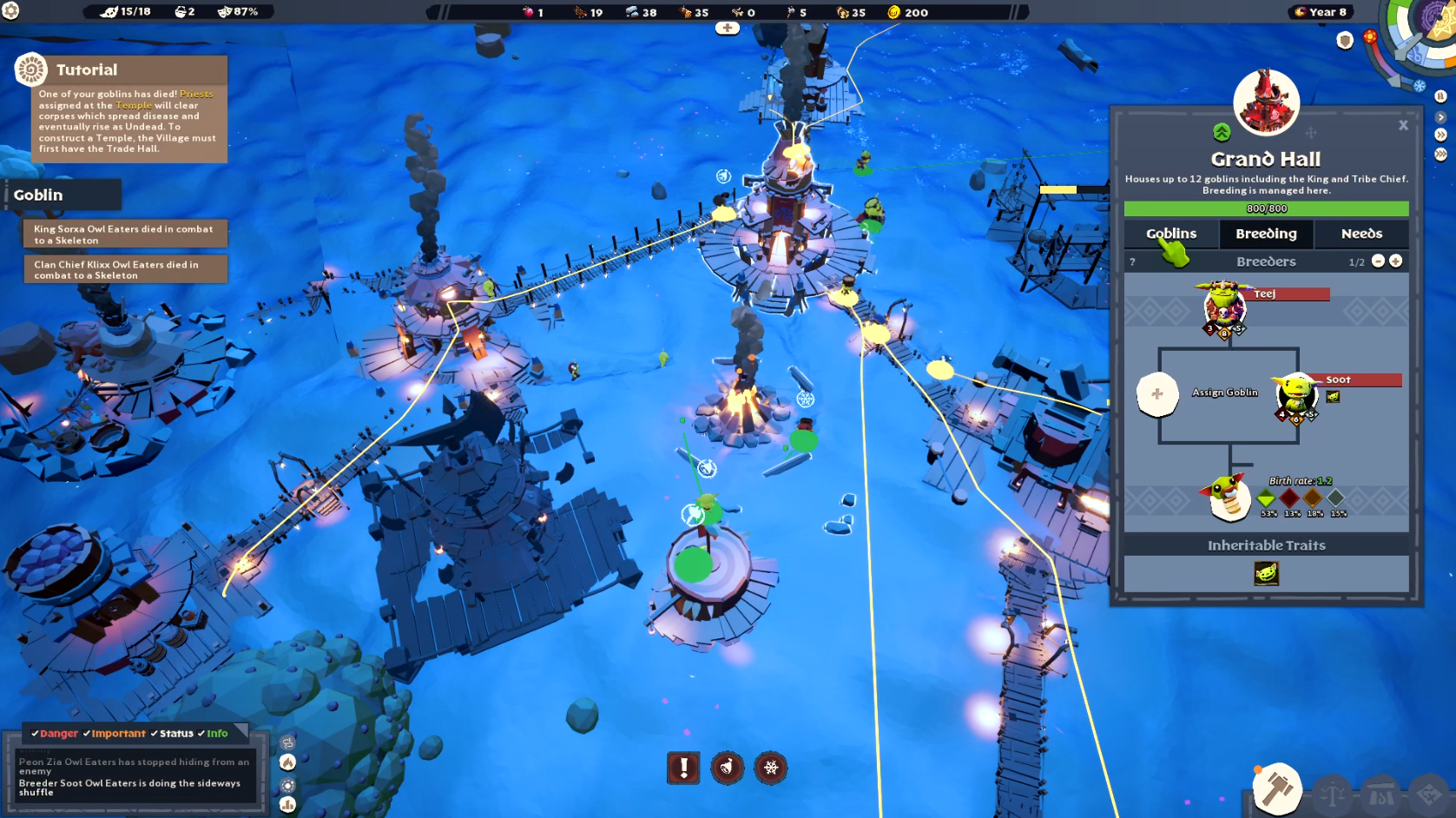
Grow too fast without the infrastructure to support it, and winter takes what you couldn't protect. Goblins of Elderstone doesn't punish you with a game-over screen. It punishes you with the story of how your King died because you didn't have enough weapons ready in time.
Is Goblins of Elderstone Worth Playing?
If you like city builders and you've been burned by ones that eventually plateau into comfortable resource management loops, yes. Goblins of Elderstone earns its tension honestly.
The goblin personality is a nice touch. The premise is light and fun, the visual style leans charming, and the early game has genuine warmth to it. But the game doesn't stay cozy. The seasonal threat cycle creates real planning pressure, and the Defend Mode mechanic (sending your entire population into ground combat) is a brilliant high-stakes failsafe that you genuinely want to avoid using and definitely will use anyway.
It's not a flawless game. The mid-game resource juggle can feel stretched thin, and there are moments where the lack of goblins to cover every building type creates a frustrating bottleneck rather than an interesting constraint. But those friction points are usually survivable, and the story you build through the struggle is worth more than a smoother experience would have been.
One king died. The tribe learned from it. That's the game. That's also the pitch.
Check it out on Steam if you want a city builder that actually makes you feel the winters. Or have a look through the Immutable Play page for more information on the game.



Comments ()