
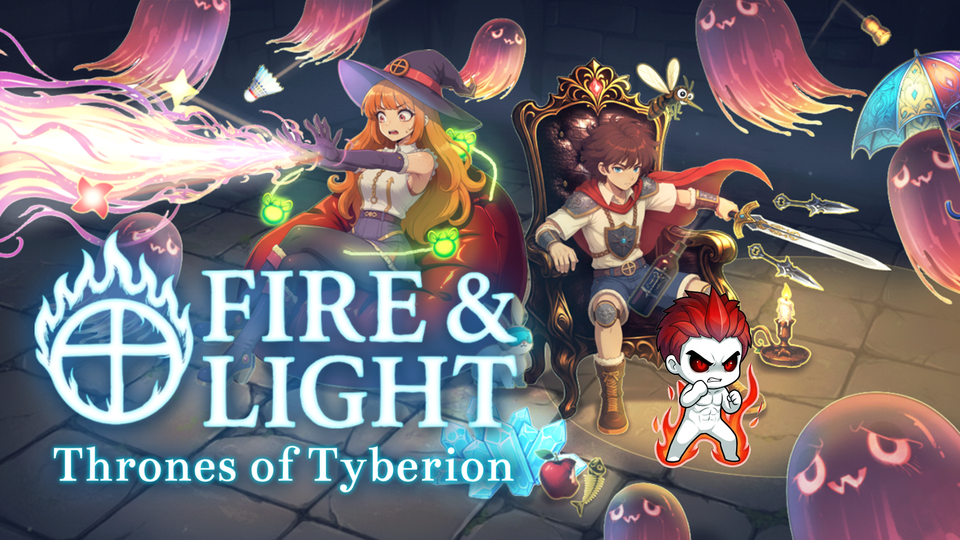
Fire & Light: Throne of Tyberion, Bullet Heaven With a Gen-AI Twist
I've been playing demos during Steam Next Fest with one specific lens:
How are indie devs using Generative AI?
Is it helping or hurting the games they're building?
Most of what I've seen falls into one of two buckets: either AI-generated slop dressed up as a game, or devs quietly using it well without anyone noticing.
Fire & Light: Throne of Tyberion is firmly in the second bucket. And honestly?
It's made me rethink how I feel about AI in indie game development.
What Is Fire & Light: Throne of Tyberion?
Fire & Light: Throne of Tyberion is a Bullet Heaven built by a solo developer, currently in the demo phase and live on Kickstarter (at time of writing).
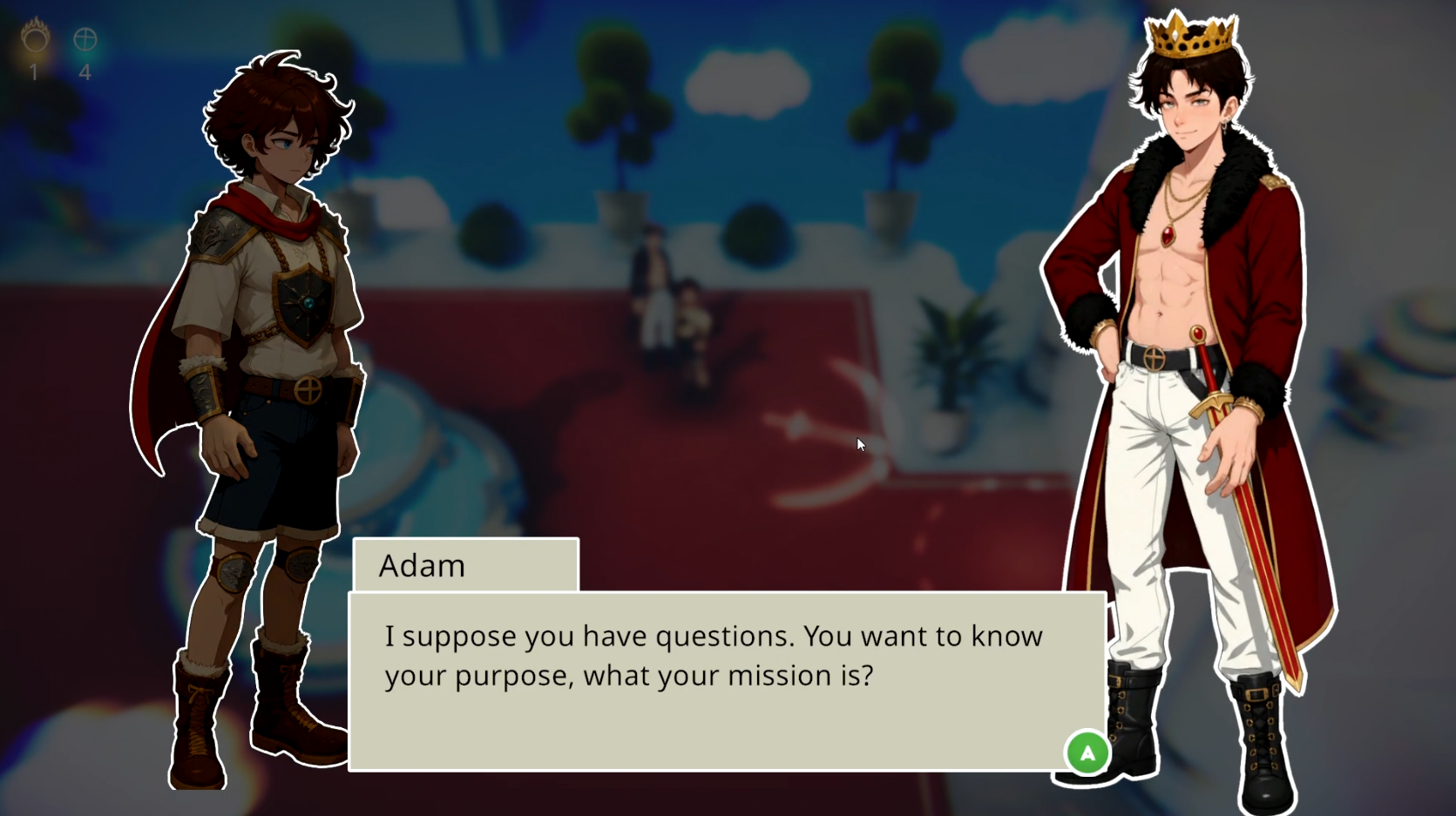
You play as heroes created by Adam, tasked with descending from Heaven to find Eve. The base of operations sits in the sky above. The chaos unfolds below.
The game caught my attention because the developer is being upfront about using Generative AI in production. Not as a marketing gimmick. Not as a shortcut to ship something unfinished. As a deliberate workflow choice to build a playable prototype that proves the concept first.
The Bullet Heaven Gameplay Loop
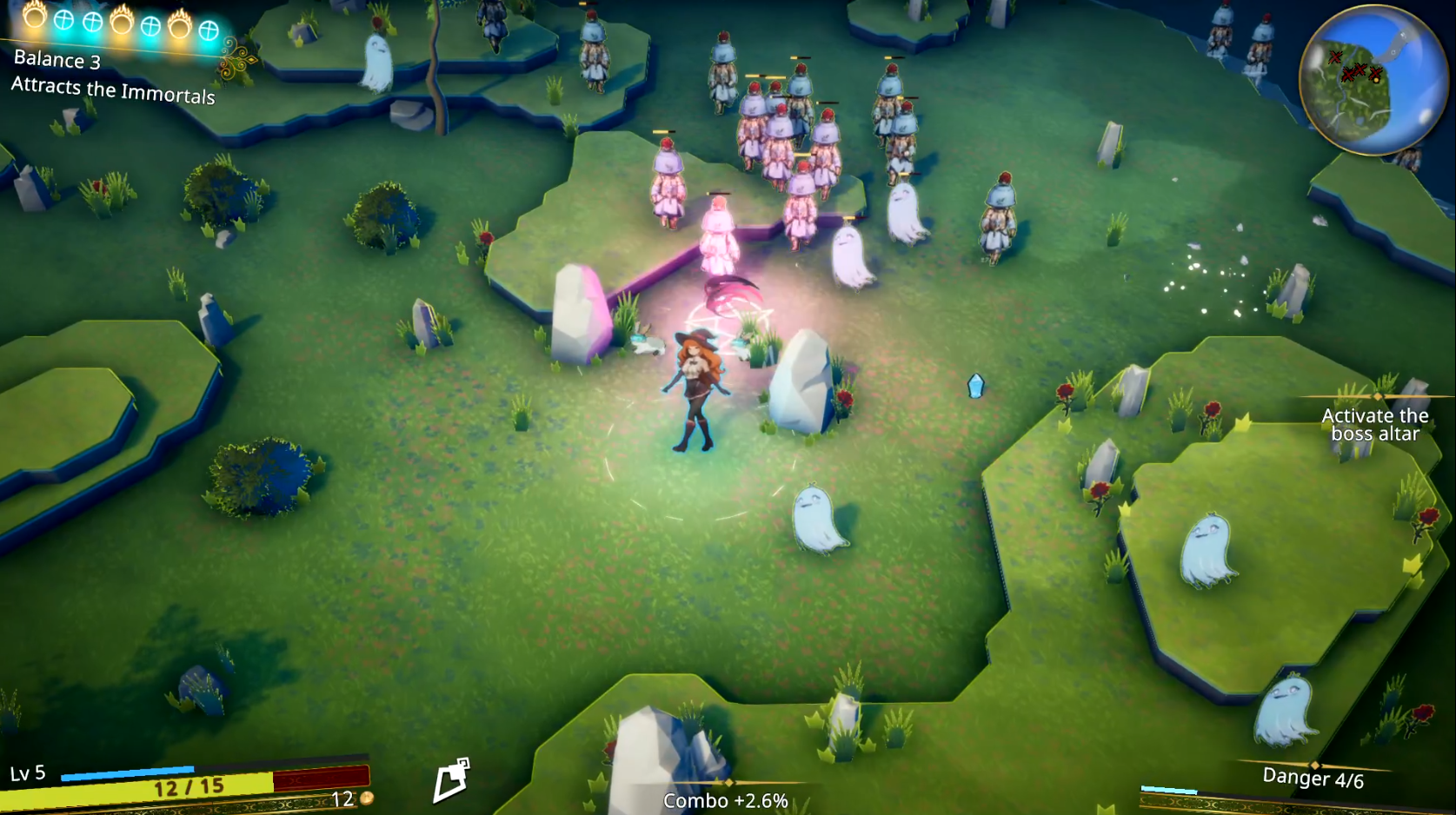
If you've played Vampire Survivors or anything in that vein, the structure here will feel immediately familiar. You drop down from Heaven into the world below, your hero auto-attacks waves of enemies as you move around the map. Survive long enough to gather resources and push further.
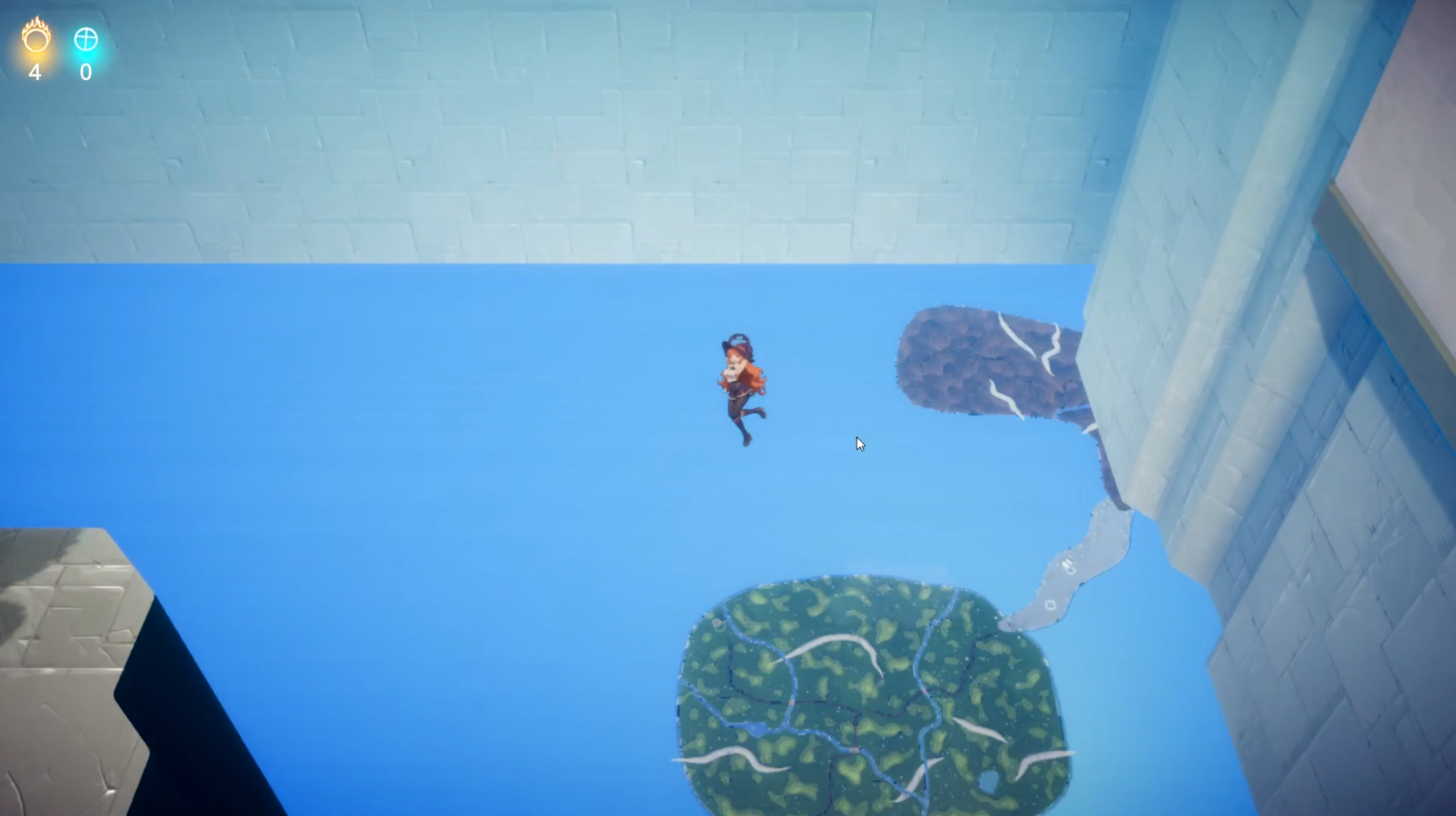
What I like is the map design philosophy. Your base in the sky can be expanded gradually as you defeat enemies and accumulate resources. It's a light base-building layer that gives every run a sense of purpose beyond just surviving. You're always working toward something. That feedback loop: fight, collect, unlock, strengthen, go again, is exactly what keeps Bullet Heaven games addictive.
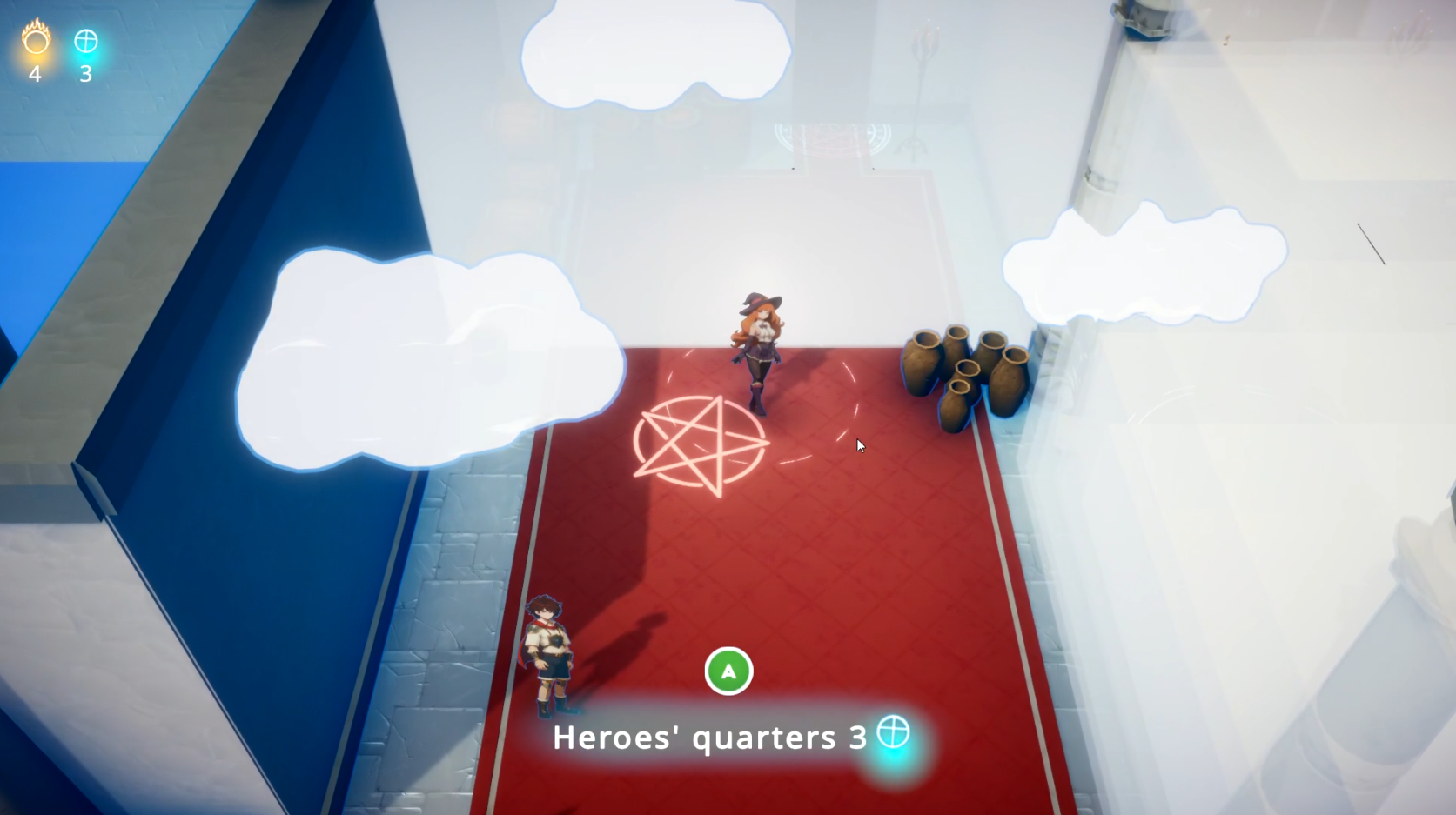
The demo includes two playable heroes, with more expected to be unlockable. The vertical layout (heaven above, battlefield below) gives the game a visual and thematic identity that sets it apart from the flat-arena approach most games in this genre use.
The Adam & Eve Lore: A Genuinely Interesting Hook
I wasn't expecting the lore to land the way it did. Adam and Eve as the anchoring mythology for a Bullet Heaven isn't an obvious choice, but it works. You're not playing as the familiar figures from the story. You're playing as the heroes Adam created to find Eve, which immediately creates a layer of separation and mystery. Why did Eve leave? What's down there? Who or what is stopping her from coming back? Should you even help Adam?
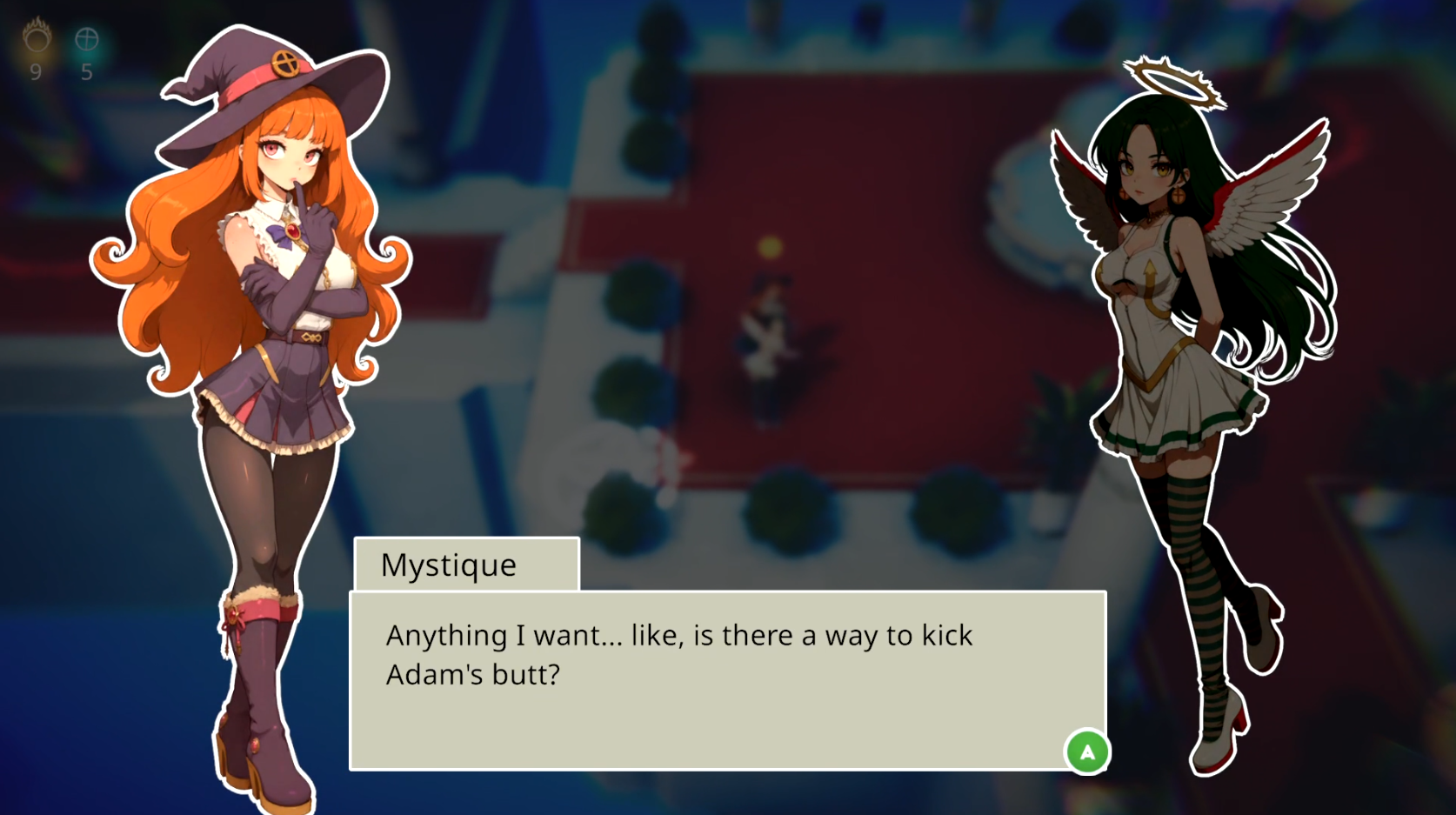
It's not a deep narrative demo. But the premise is strong enough to make you care about what the full game might deliver. That's exactly what a demo's lore job is: create intrigue.
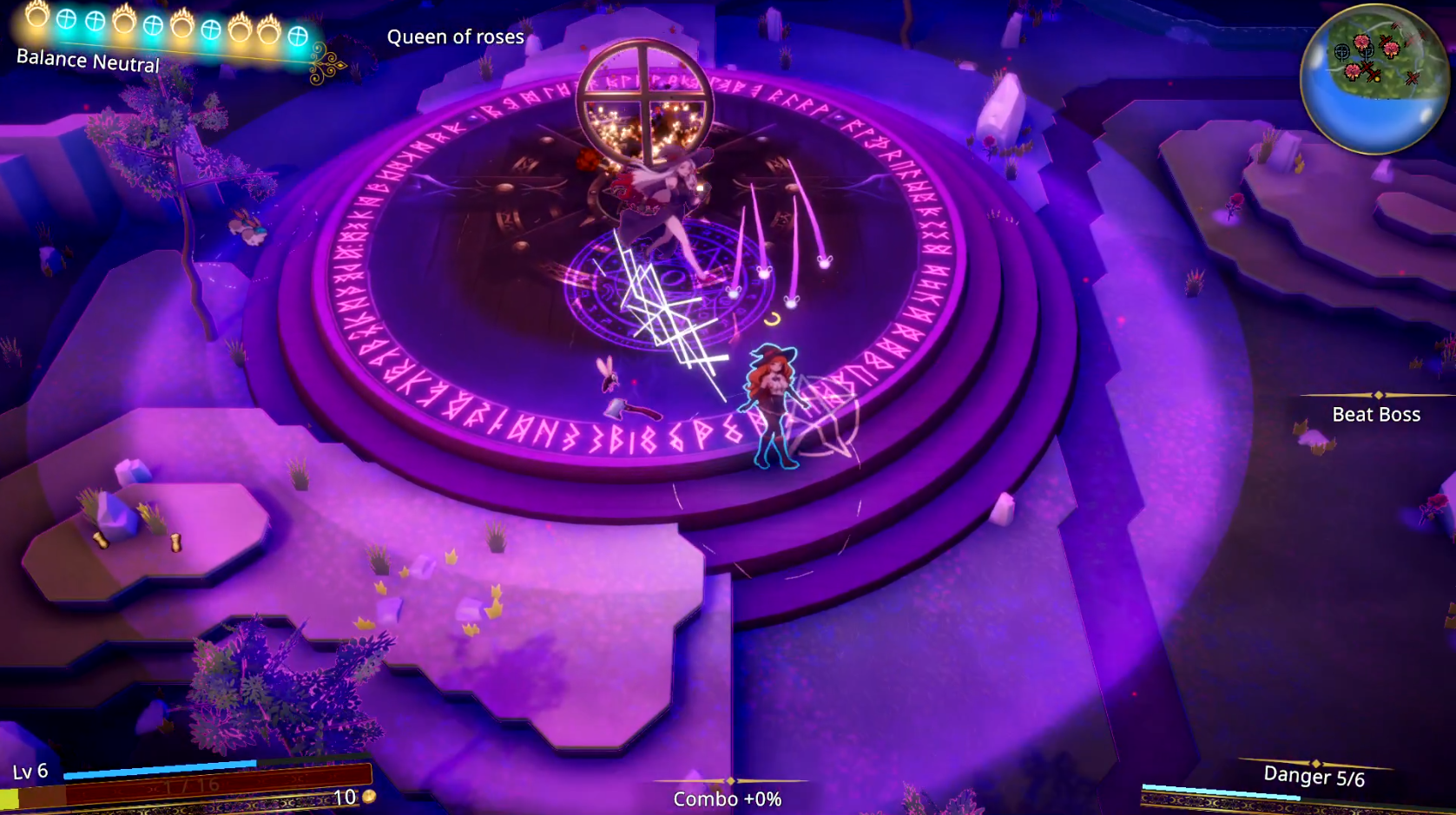
The hero designs reinforce this. The developer has stated he authored the character designs himself, using AI specifically to generate the poses and variations he needed; rather than outsourcing the design vision entirely to a model. You can feel it in the consistency of the characters' visual identity.
Where the Gen-AI Shows
To be clear: this is a demo, and the placeholders (which may be AI-assisted) are visible in certain places. Here's what I noticed:
Style drift across assets. Some environments and UI elements don't quite feel like they belong to the same visual language as the hero designs. The characters have a coherent identity; some background elements feel like they came from a different mood board.
Basic UI and in-game text. Functional, but not polished. It reads like placeholder work, which is exactly what it is.
Dialogue that's a little too clean. AI-written dialogue tends to have a certain frictionless quality to it. It's grammatically perfect, emotionally flat. A few lines in the demo have that texture. Nothing game-breaking, but it stands out once you notice it.
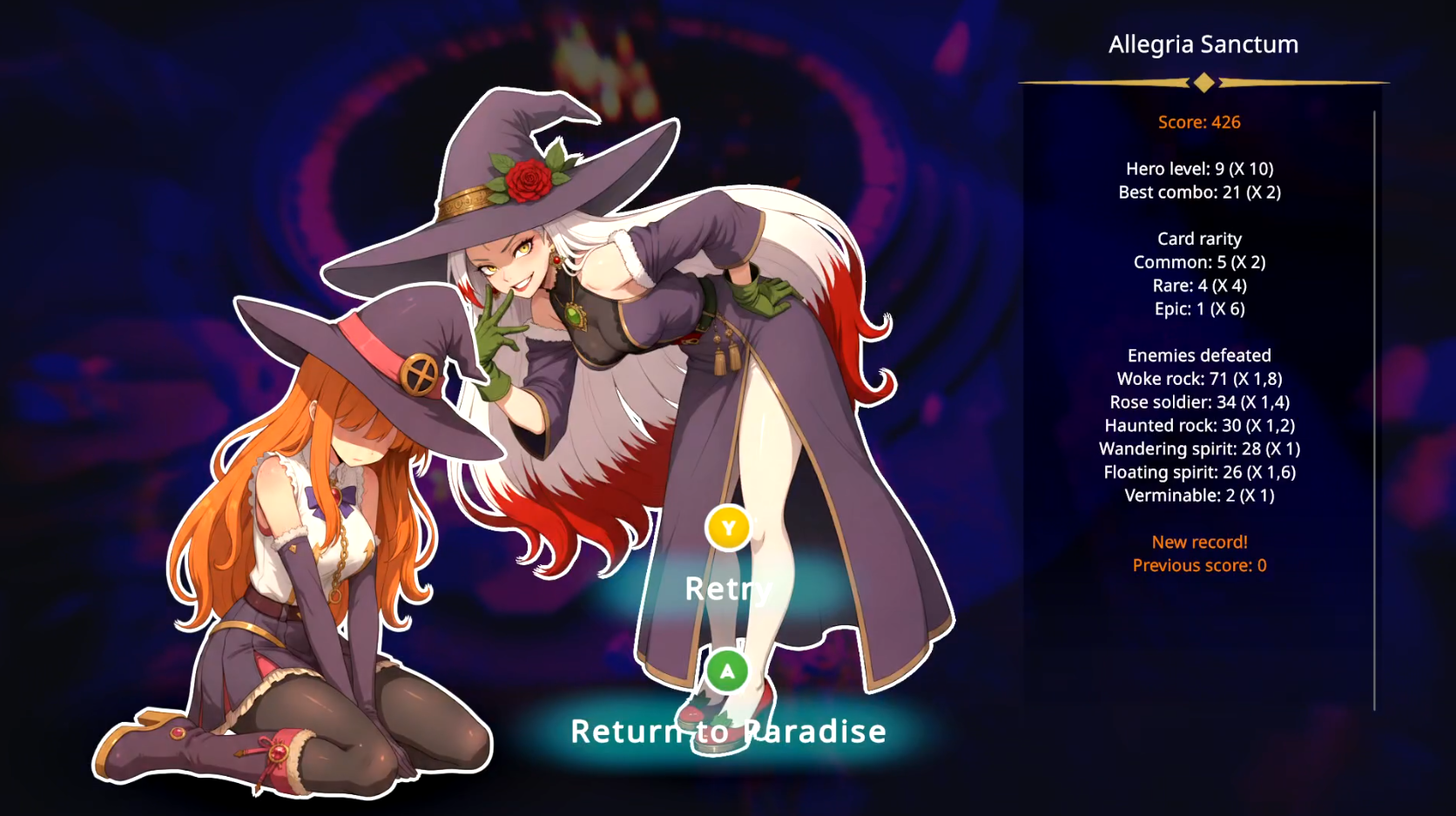
Here's the thing, though: none of this surprised me, and none of it bothered me. Because the developer isn't pretending this is the final game.
Why This Dev's AI Approach Is Actually the Right One
The philosophy here is simple and smart: use Gen-AI to build a playable prototype that proves the game works, then replace the placeholder assets before public launch.
That's genuinely the best-case use of this technology that I've seen in indie development. AI fills the gaps a solo dev simply can't cover in the early stages. Concept art, item descriptions, and environmental variety may use Gen-AI without locking in those choices as final. It's a means to an end, not a substitute for craft.
Compare this to the alternative: either wait years to have all the "real" assets before shipping a demo, or ship a demo that's mechanically solid but visually empty and hard to evaluate. Gen-AI as a prototyping tool solves that problem directly. It lets a solo developer communicate the full vision of a game at a stage where that vision wouldn't otherwise be visible.
If Thrones of Tyberion funds and reaches launch with the placeholder assets replaced by proper art and writing, the AI's role in the development process will be essentially invisible. And that's the right outcome.
Final Verdict: Should You Back It on Kickstarter?
If you like Bullet Heaven games and you want to support a solo dev who's making smart, transparent choices about how they build. The dev discloses this on the Kickstarter.
The gameplay loop is solid. The lore premise is interesting. The hero designs show a clear authorial vision. And the developer's approach to Gen-AI is the model I'd point to when people ask what responsible use of this technology in indie development actually looks like.
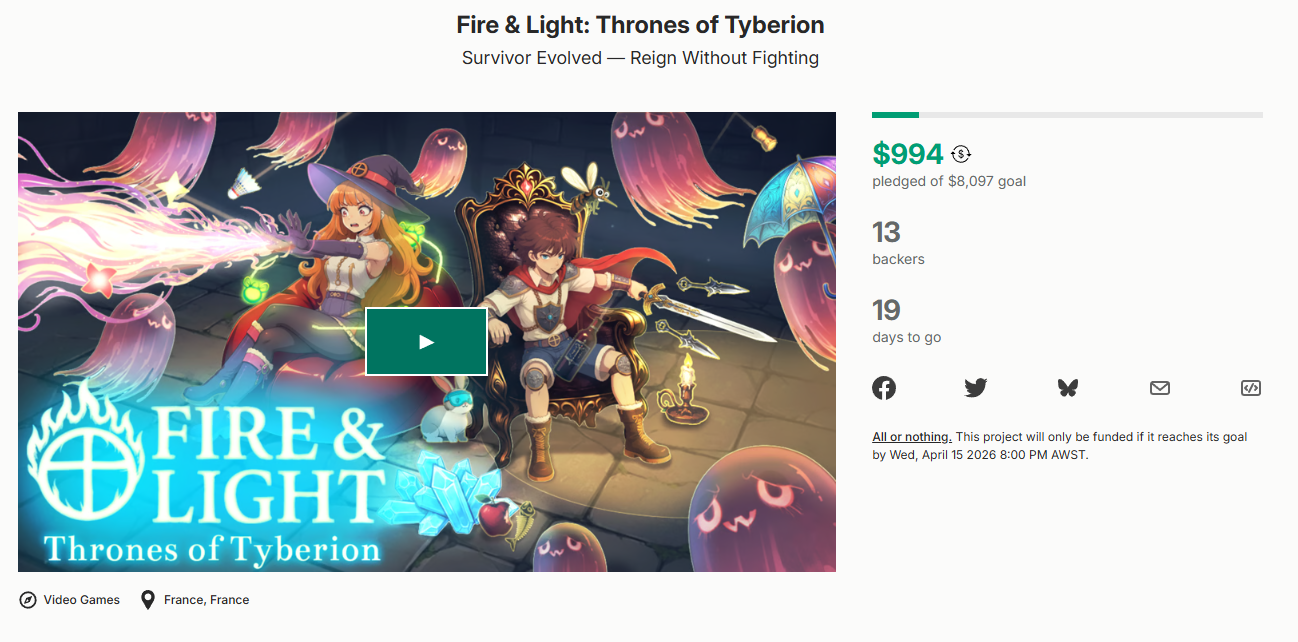
The open question is whether it successfully gets the funding, and whether that funding translates into the visual and writing polish that will take this from "promising prototype" to "finished game."
But as a Steam Next Fest demo? It did exactly what a demo should do. It made me want to see where this goes.
You can play the demo on Steam here, or
Fund the game on Kickstarter here
Have you played the Fire & Light: Throne of Tyberion demo? Drop your take in the comments, curious whether others noticed the same things I did.




Comments ()